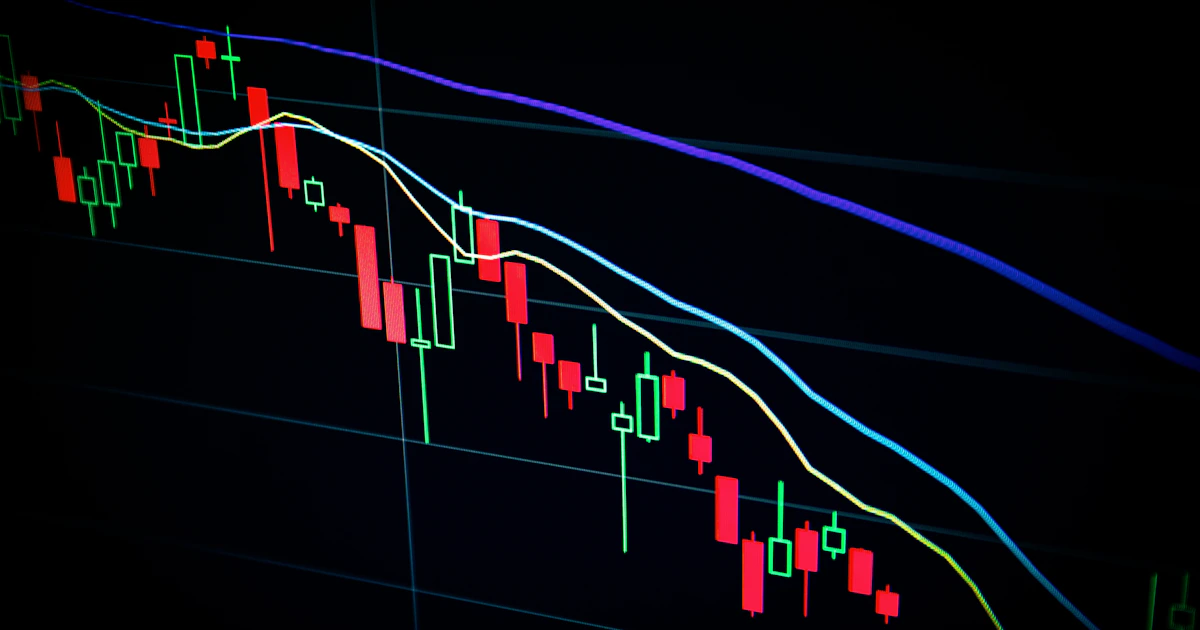
The question of whether rules-based execution systematically outperforms discretionary decision-making in financial markets has been the subject of academic study since at least the 1990s. The empirical record is not unambiguous — strategy specifications, cost assumptions, and sample selection all affect the conclusion — but several findings have been replicated across independent datasets and market venues.
The Data on Manual Trading
The 97% stat from Brazil isn't an outlier. It sits comfortably within a body of evidence that spans two decades and multiple markets.
Barber and Odean's landmark 2000 study in the Journal of Finance analyzed 66,465 households with brokerage accounts from 1991 to 1996. Their finding: the most active traders underperformed the market by 6.5 percentage points annually. The market returned 17.9% per year during that period. The top quintile of traders by activity earned 11.4%. They weren't just losing to the index — they were losing to it by a margin that would destroy a hedge fund's reputation.
The CFTC confirmed this pattern in futures markets with a 2024 report analyzing retail futures traders. Their data showed that the 60th percentile retail futures trader earned zero or near-zero profit. Think about that. You had to be better than 60% of all retail futures participants just to break even.
A follow-up study by Barber and Odean in 2001 added another dimension: men traded 45% more frequently than women, and that excess trading cost them 2.65 percentage points in annual returns. Women still underperformed from overtrading, but less severely. The pattern was clear — the more you trade on gut instinct and perceived skill, the worse you do.
None of this means markets are perfectly efficient or that no human can trade profitably. But the base rate is brutal, and it gets worse the more actively a manual trader participates.
| Study | Sample | Key Finding | Source |
|---|---|---|---|
| Chague et al. (2020) | 19,646 Brazilian futures traders, 13 years | 97% of persistent day traders lost money | SSRN 3423101 |
| Barber & Odean (2000) | 66,465 US households, 5 years | Most active traders underperformed by 6.5% annually | Journal of Finance |
| Barber & Odean (2001) | 35,000 US households | Overtrading cost men 2.65% in annual returns | Quarterly J. of Econ. |
| CFTC (2024) | US retail futures traders | 60th percentile trader earned zero profit | CFTC Retail Report |
| Liaudinskas (2022) | NASDAQ OMX human vs algo traders | Humans showed substantial disposition effect; algos showed none | BSE Working Paper |
Why Manual Traders Lose
If markets were a pure skill contest, you'd expect persistent traders to improve over time. They don't, according to the Brazilian data. The reason is structural: human cognition has systematic biases that become liabilities in financial markets.
The Disposition Effect
The most well-documented behavioral finance bias in trading is the disposition effect — the tendency to sell winners too early and hold losers too long. It's the opposite of what every trading textbook recommends ("cut your losers, let your winners run"), and it's nearly universal among human traders.
A 2022 study by Liaudinskas using NASDAQ OMX data compared algorithmic and human traders directly. Human traders showed a "substantial" disposition effect. Algorithms showed "virtually none." The study went further: the human disposition effect increased on colder days. Physical discomfort made traders hold losers even longer and dump winners even faster. The algorithms, predictably, were unaffected by the weather in Stockholm.
This isn't just a retail problem. Garvey and Murphy (2004) studied professional proprietary traders who earned an average of $1.4 million per year. Even these elite traders sold their winners too fast. They had the skill to find profitable setups, but their execution was compromised by the same bias that afflicts a first-year retail trader.
Overconfidence and Overtrading
Overconfidence is the engine behind overtrading. Barber and Odean's gender study wasn't really about gender — it was about what happens when you think you know more than you do. More confident traders traded more frequently, generated more transaction costs, and earned lower returns. The pattern held across the board. Confidence and frequency went up together. Returns went down.
Manual traders also suffer from recency bias (overweighting recent events), anchoring (fixating on entry price rather than current market conditions), and revenge trading after losses. These aren't character flaws. They're features of human cognition that evolved for environments very different from staring at Level II quotes on an ES chart.

What Algorithms Actually Fix
Algorithms don't have emotions. That sentence gets thrown around so often it sounds like marketing copy, but the academic evidence supports it as the primary advantage of systematic trading.
The Liaudinskas NASDAQ OMX study is the clearest evidence. When you strip out the disposition effect, you remove the single largest behavioral drag on trading performance. An algorithm that fires a stop-loss at -2% fires it at -2% whether the trader behind it just had a fight with their spouse, whether the market has been ripping for three straight days, or whether it's 3 AM and they're asleep.
Consistent execution is the second advantage. A manual trader might follow their rules 90% of the time. That other 10% — the FOMO entry, the skipped stop, the "just this once" position size increase — is where accounts blow up. An algorithm executes the same way on trade 1 and trade 1,000. (For the math behind why position sizing matters more than most traders realize, see the related analysis of risk management and position sizing in futures.)
The third advantage is capacity. Algorithms can monitor multiple instruments across multiple timeframes simultaneously. A human trader watching ES, NQ, and crude simultaneously will inevitably miss signals or make errors when all three move at once. An algo doesn't degrade under cognitive load. It can also operate in sessions that humans physically cannot — including the overnight window where 100% of average S&P 500 returns concentrate.
Algorithmic trading now accounts for 60-75% of US equity volume. That number alone tells you something about where institutional capital has placed its bets on the human vs. machine question.

The Institutional Scoreboard
The best real-world test of systematic vs. discretionary trading comes from managed futures — Commodity Trading Advisors (CTAs) who run systematic strategies at institutional scale.
Two stress tests stand out.
In 2008, the S&P 500 fell 37%. The Barclay CTA Index returned +14%. That's a 51-percentage-point spread during the worst financial crisis since the Great Depression. Systematic trend followers didn't predict the crash. They didn't need to. Their models identified the trend, went short, and held. No second-guessing, no "it's oversold, time to buy the dip."
In 2022, the S&P 500 fell 19%. Elite systematic traders returned +16.88%. Same pattern, different decade. When equities cratered, systematic strategies captured moves in rates, commodities, and currencies that discretionary traders largely missed because they were anchored to equity market narratives.
The survival data is equally telling. Systematic fund attrition runs at 7.8% annually, compared to 10.8% for discretionary funds. Over a decade, that survival gap compounds dramatically. Systematic funds die less often because they tend to manage risk more consistently — max drawdown limits, position sizing rules, and correlation controls are baked in, not subject to a portfolio manager's mood on a given Tuesday.
| Period | S&P 500 | Systematic CTAs | Spread |
|---|---|---|---|
| 2008 | -37% | +14% (Barclay CTA Index) | +51 pts |
| 2022 | -19% | +16.88% (Elite Systematic) | +35.88 pts |
| Metric | Systematic Funds | Discretionary Funds | Advantage |
|---|---|---|---|
| Annual Attrition Rate | 7.8% | 10.8% | Systematic: 28% lower failure rate |
| 10-Year Survival (est.) | ~44% | ~30% | Systematic: 47% more likely to survive |
| Crisis Alpha (2008) | +14.0% | Varies widely | +51 pts vs S&P 500 |
| Crisis Alpha (2022) | +16.88% | Varies widely | +35.88 pts vs S&P 500 |
This is not to say systematic strategies always outperform. In low-volatility, range-bound markets, trend-following CTAs can underperform for extended stretches. The point is that when it matters most — during regime changes and market stress — systematic execution tends to hold up better than discretionary decision-making.
The Honest Downside of Algorithmic Trading
The structural advantages above are not a complete picture. The countervailing fact is that roughly 90% of algorithmic strategies fail when deployed to live markets, per the practitioner consensus, and the broader academic record on backtest-to-live performance degradation is consistent with that figure.
The primary cause is overfitting — building a strategy that explains historical data perfectly but captures noise rather than signal. A backtest that shows a beautiful equity curve with a 3.0 profit factor and 80% win rate across 10 years of data might just be a very sophisticated description of the past that has zero predictive value.
Bailey, Borwein, López de Prado, and Zhu demonstrated in a 2014 paper (published in the Notices of the American Mathematical Society) that high simulated performance is "trivially achievable" through data mining. Give a researcher enough parameters and enough historical data, and they will find patterns that look statistically significant but are pure noise. The paper should be required reading for anyone evaluating backtest results.
Common Algo Failure Modes
- Curve fitting: Optimizing parameters to fit historical data rather than capturing a durable market dynamic. A strategy with 14 parameters tuned to 10 years of ES tick data is almost certainly overfit.
- Regime dependency: A trend-following algo built during a trending market will underperform in chop. A mean-reversion strategy built during range-bound conditions will get destroyed by a trending move.
- Ignoring execution costs: A strategy that averages 2 ticks of profit per trade on backtested data may turn negative after accounting for real-world slippage, commissions, and fill quality.
- Survivorship bias in strategy selection: Testing 100 parameter sets and deploying the one that performed best is not validation — it's a form of data mining, even if each individual test looks clean.
- Neglecting out-of-sample validation: If every data point was used to build the strategy, there's no independent evidence that it works. Walk-forward optimization and Monte Carlo simulation exist for a reason.
The difference between the 10% of algos that survive and the 90% that don't usually comes down to development discipline: out-of-sample testing, walk-forward analysis, realistic cost assumptions, and the willingness to kill a strategy that doesn't hold up under scrutiny. The algo itself isn't the edge. The process behind it is.
Interpreting the Evidence
Three observations summarize the combined evidence above:
The discretionary-retail underperformance finding is robust. The result holds across independent datasets (U.S., Taiwan, Brazil), different instruments (equities, futures), different time periods (1991–2020s), and different methodologies (cross-sectional regression, long-run cohort tracking, brokerage-level administrative records). Population-scale underperformance among retail discretionary traders is not a single-paper finding that could reflect sample error; it is the modal result of the literature.
Behavioral mechanisms explain part of the gap. The disposition effect, overconfidence, and overtrading have been identified as statistically significant contributors to retail underperformance in peer-reviewed work, and the Liaudinskas (2022) comparison of human and algorithmic traders on the same exchange documents that at least the disposition-effect channel is absent in algorithmic participants. The magnitude of the gap attributable to each individual bias varies across studies.
Systematic does not equal superior unconditionally. Systematic CTAs have exhibited crisis-period outperformance relative to equity benchmarks in multiple drawdown regimes and lower fund attrition than discretionary peers. These are not, however, guarantees of outperformance in all regimes; trend-following systematic funds have documented underperformance during range-bound regimes (Baltas & Kosowski 2013 discuss post-2008 dynamics). On the retail side, the practitioner consensus that roughly 90% of algorithmic strategies fail in live deployment is consistent with the Bailey et al. (2014) formalization of backtest overfitting.
The most defensible synthesis is that the academic evidence documents meaningful structural differences between discretionary and systematic approaches — in consistency of execution, enforceability of pre-committed risk rules, and behavioral-bias exposure — while also documenting that the advantage of systematic over discretionary is conditional on strategy design, cost structure, and market regime rather than automatic.
Conclusion
The peer-reviewed literature on retail discretionary trading and the academic comparison of human and algorithmic traders on shared exchanges point in the same direction: the behavioral mechanisms that produce persistent underperformance in human traders are either reduced or absent in rules-based systems. The institutional record of systematic managed-futures strategies over complete market cycles supports the same interpretation at a different scale.
The evidence does not, however, support the conclusion that automation is a sufficient condition for profitable trading. The majority of retail algorithmic strategies fail, primarily through errors in the development process rather than in the execution. The advantage of systematic over discretionary is structural but conditional — it is realized when pre-committed rules encode a genuine statistical edge, are validated out-of-sample, and are executed in conditions consistent with the backtest assumptions.
Disclaimer: FalcoAlgo is a software product of Falco Systems LLC and is not a registered investment adviser. This article is for educational purposes only and does not constitute investment, trading, tax, or legal advice. Futures trading involves substantial risk of loss. Hypothetical performance results have inherent limitations and are not indicative of future results.


